
Grade A vs Grade B Vanilla Beans: Which Should You Use?
Share
If you've ever shopped for whole vanilla beans, you've probably seen two descriptions again and again: Grade A vanilla beans and Grade B vanilla beans.
So what's actually the difference?
The short answer is that Grade A beans generally contain more moisture and are prized for their soft, flexible texture, while Grade B beans are typically drier and are commonly used for making vanilla extract.
But that doesn't mean one grade is simply "better" than the other.
The right choice depends on what you're making.
Grade A vs. Grade B Vanilla Beans at a Glance
| Grade A Vanilla Beans | Grade B Vanilla Beans | |
|---|---|---|
| Texture | Soft and pliable | Typically drier |
| Moisture | Higher | Lower |
| Appearance | Plump and flexible | Often thinner/drier |
| Great for | Baking, desserts, cooking | Homemade vanilla extract |
| Can make extract? | Yes | Yes |
| Can be used in recipes? | Yes | Yes |
The biggest misconception is that Grade B means poor-quality vanilla.
It doesn't.
Grade A and Grade B beans simply have different characteristics that can make them better suited to different uses.
What Are Grade A Vanilla Beans?
Grade A beans are often called gourmet vanilla beans.
They're typically soft, pliable and have a higher moisture content than extract-grade beans.
If you've ever watched a chef slice open a vanilla pod and scrape out the tiny seeds inside, that's the type of application where a high-quality Grade A bean really shines.
They're excellent for recipes such as:
- Ice cream
- Custard
- Crème brûlée
- Pastry cream
- Cakes
- Frosting
- Sauces
- Panna cotta
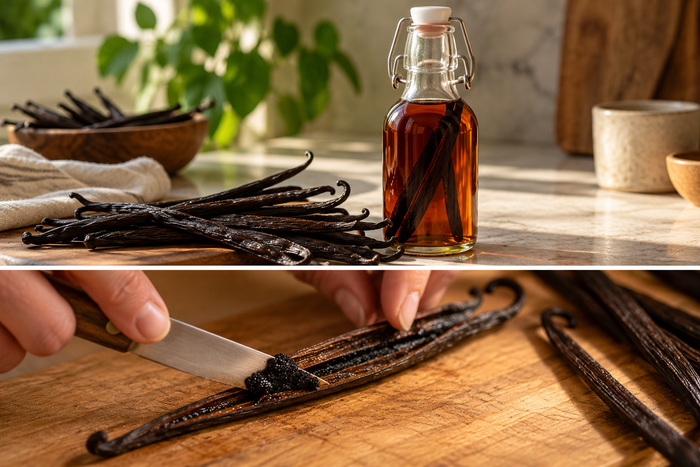
To use one, split the bean lengthwise with a sharp knife and scrape the interior with the back of the blade.
And don't throw the pod away after scraping it.
The pod itself still contains vanilla flavor and can be used to infuse cream, milk, sugar and other ingredients.
What Are Grade B Vanilla Beans?
Grade B beans are commonly referred to as extract-grade vanilla beans.
They generally contain less moisture than Grade A beans and may look somewhat drier.
That's not necessarily a disadvantage.
When you're making homemade vanilla extract, you're deliberately placing vanilla beans into alcohol so their aromatic compounds can be extracted over time.
You're not paying primarily for a beautiful, plump bean that you're going to slice open and present in a recipe.
That's one reason Grade B vanilla beans are an excellent choice for homemade vanilla extract.
Are Grade B Vanilla Beans Lower Quality?
This is where the terminology can be misleading.
"Grade B" sounds like second-rate vanilla.
For many uses, it isn't.
If your goal is to make vanilla extract, the appearance and flexibility that make Grade A beans desirable for culinary use may not be particularly important to you.
What matters is using genuine, properly cured vanilla beans.
Think of the grades as being suited to different purposes, rather than simply "good" versus "bad."
Which Vanilla Beans Are Best for Making Extract?
For most people, we'd recommend Grade B vanilla beans for homemade extract.
They're well suited to extraction and can provide a more economical way to make larger batches.
A simple starting ratio is:
1 ounce of vanilla beans per 8 ounces of alcohol
Use an alcohol that's at least 35% ABV (70 proof).
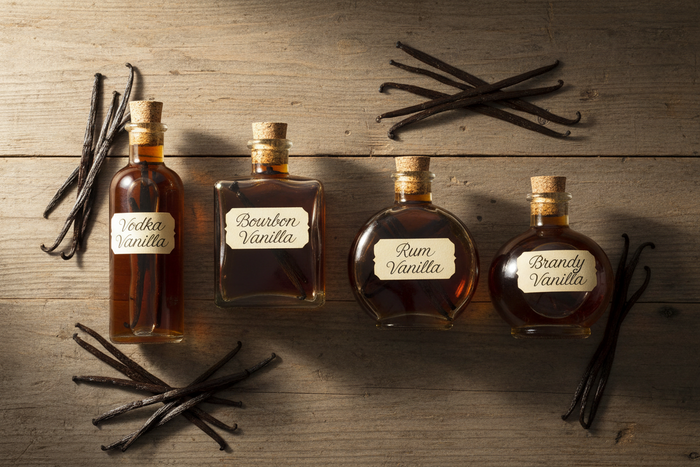
Vodka is popular because of its relatively neutral flavor, but rum, bourbon and brandy can create different flavor profiles.
After combining the beans and alcohol, store the bottle away from direct sunlight and give it time.
Vanilla extraction isn't instant.
While you'll see the liquid begin changing relatively quickly, allowing your extract to mature for months develops considerably more character. Many home extract makers begin using their extract around the six-month mark while allowing it to continue aging.
Can You Make Vanilla Extract With Grade A Beans?
Absolutely.
There's nothing about Grade A vanilla beans that prevents them from being used for extract.
In fact, they can make excellent extract.
The question is whether that's the best use of your money.
If you have beautiful, moist Grade A beans, you may prefer using them in applications where you benefit from their texture and ease of splitting and scraping.
If you're buying beans specifically to put into a bottle of alcohol for months, Grade B beans often make more sense.
Can You Cook With Grade B Vanilla Beans?
Yes.
Grade B beans aren't restricted to extract.
Because they're drier, however, they may not be as easy to split and scrape as softer Grade A beans.
You can still use them for infusions and other culinary applications.
If your primary goal is to scrape vanilla seeds directly into a dessert, we'd generally choose Grade A.
How Many Vanilla Beans Do You Need for Homemade Extract?
Instead of relying on the number of beans, it's better to measure vanilla by weight.
Vanilla beans are agricultural products. One bean may be substantially larger, heavier or more moist than another.
For Dadora's beans, approximately 10 beans is often around 1 ounce, but weight is the more reliable measurement.
For a straightforward home batch:
8 ounces alcohol + approximately 1 ounce vanilla beans
That's an easy ratio to scale:
16 oz alcohol → 2 oz beans
32 oz alcohol → 4 oz beans
This also explains why simply asking "How many vanilla beans do I need?" doesn't always produce an accurate answer.
Tahitian vs. Madagascar Vanilla: Is That the Same as Grade A vs. Grade B?
No.
These describe completely different characteristics.
Grade A vs. Grade B refers primarily to characteristics such as moisture, appearance and intended use.
Tahitian vs. Madagascar generally refers to different types/origins of vanilla with different aromatic profiles.
Dadora grows Vanilla tahitensis in Esmeraldas, Ecuador.
Our Tahitian vanilla has a floral and fruity profile with notes reminiscent of apricot and a nutty finish.
So you can have a Grade A Tahitian vanilla bean or a Grade B Tahitian vanilla bean.
Grade A or Grade B: Which Should You Buy?
Here's the easiest way to decide.
Choose Grade A if:
You want soft, pliable beans for baking, desserts, cooking, splitting and scraping.
Choose Grade B if:
Your primary goal is making homemade vanilla extract and you want an extract-grade bean.
And if you're still unsure, don't overthink the grade.
Start with what you're planning to make.
Farm-Direct Tahitian Vanilla Beans From Ecuador
Dadora Vanilla grows Tahitian vanilla in Esmeraldas, Ecuador, where our vanilla is cultivated before undergoing the long curing process that develops its aroma and flavor.
We offer both Grade A and Grade B Tahitian vanilla beans, so you can choose the bean that makes the most sense for what you're making.
Making desserts or cooking? → Shop Grade A Tahitian Vanilla Beans
Making homemade extract? → Shop Grade B Tahitian Vanilla Beans
Frequently Asked Questions
What is the difference between Grade A and Grade B vanilla beans?
Grade A beans are generally higher in moisture, softer and more pliable. Grade B beans are typically drier and are commonly used for making vanilla extract.
Are Grade A vanilla beans better than Grade B?
Not necessarily. Grade A is often preferred for culinary applications where you're splitting and scraping the bean. Grade B can be an excellent choice for vanilla extract.
Is Grade B vanilla good for extract?
Yes. Grade B beans are commonly called extract-grade vanilla beans and are particularly well suited to homemade vanilla extract.
Can you use Grade A beans for vanilla extract?
Yes. Both grades can be used to make extract.
How many vanilla beans should I use for 8 ounces of alcohol?
A useful starting point is approximately 1 ounce of vanilla beans for 8 ounces of alcohol. Measuring by weight is more reliable than counting individual beans.
What alcohol should I use for vanilla extract?
Vodka is a popular neutral option, while bourbon, rum and brandy can contribute additional flavors. Use alcohol containing at least 35% ABV (70 proof).